In This Guide
- The Visibility Landscape for Functional Medicine Practitioners
- Why Most Functional Medicine Practitioners Are Invisible Online
- How AI Search Is Changing Discovery
- Traditional SEO vs. Entity-Based Visibility
- The 5-Layer Visibility Framework
- Keywords That Matter for Functional Medicine Practitioners
- Your 90-Day Visibility Action Plan
- How to Measure Visibility Progress
- Frequently Asked Questions
1. The Visibility Landscape for Functional Medicine Practitioners
The U.S. functional medicine market exceeds $5 billion annually with over 100,000 practitioners trained through the Institute for Functional Medicine. Patient demand is driven by chronic disease management dissatisfaction with conventional medicine outcomes.
Large integrative medicine centers and celebrity-backed functional medicine practices dominate search results while individual practitioners with strong clinical outcomes and personalized treatment approaches lack the digital visibility to attract the patient volume their model requires.
Functional medicine authority building through dual-credential positioning, root-cause treatment philosophy content, and patient outcome documentation that bridges conventional medical credibility with the functional medicine approach patients seek.
Online visibility for functional medicine practitioners breaks down into three channels: traditional Google search, AI-powered answer engines (ChatGPT, Google AI Overviews, Perplexity), and social discovery platforms. Most functional medicine practitioners focus on the first one. The smart ones are building for all three.
By 2025, over 40% of informational searches triggered an AI-generated answer at the top of Google results. For functional medicine practitioners, this means your patients with chronic conditions seeking root-cause treatment, individuals dissatisfied with conventional medicine outcomes, and health-conscious patients seeking preventive care may read an AI summary about your profession and never scroll to the traditional search results below. Being visible where AI pulls its answers is the next frontier.
2. Why Most Functional Medicine Practitioners Are Invisible Online
There is a difference between having a website and being visible. Most functional medicine practitioners have a website. Very few have a presence that shows up when patients with chronic conditions seeking root-cause treatment, individuals dissatisfied with conventional medicine outcomes, and health-conscious patients seeking preventive care search for what they need.
The common visibility failures for functional medicine practitioners:
No content beyond the homepage. A five-page website with an About page, a Services page, and a Contact page does not give Google enough material to rank you for anything beyond your exact name. patients with chronic conditions seeking root-cause treatment, individuals dissatisfied with conventional medicine outcomes, and health-conscious patients seeking preventive care who search for "functional medicine doctor, functional medicine practitioner near me, root cause medicine, integrative health doctor" will never find you.
No external mentions. If the only place your name appears is your own website and your LinkedIn, Google has weak confidence in your entity. External mentions — press, directory listings, guest articles — are the signals that build authority.
Inconsistent identity across platforms. Your LinkedIn says one name, your website says another, your Google Business Profile uses a third variation. Google's entity recognition fails when it cannot match these as the same person.
Zero review velocity. Google Reviews and Yelp and Google Business Profile matter because they generate fresh, unique content about you. functional medicine practitioners who stopped asking for reviews six months ago are losing visibility to competitors who ask every client.
No structured data. Without Person or Organization schema on your website, Google's crawlers have to guess who you are. Structured data removes the guesswork and feeds directly into the Knowledge Graph.
3. How AI Search Is Changing Discovery
When someone asks ChatGPT "Who is the best functional medicine practitioner in [city]?" or asks Perplexity "What should I look for in a functional medicine practitioner?", the answer comes from AI models trained on web content. These models pull from published articles, directory listings, reviews, and authoritative sources across the web.
Here is what that means for functional medicine practitioners: the content you publish today trains the AI models that will recommend (or not recommend) you tomorrow. functional medicine practitioners with published articles, strong reviews, and a consistent web presence are already being surfaced in AI answers. Those without them are invisible in this channel.
Three things make functional medicine practitioners visible to AI search engines:
- Published authority content. Articles in The Journal of Functional Medicine and Integrative Medicine: A Clinician's Journal and similar sources that demonstrate your expertise on specific topics. AI models weight published, attributed content more than anonymous blog posts.
- Consistent entity signals. The same name, credentials, and expertise mentioned across multiple independent sources. AI models cross-reference just like Google does.
- Recency and volume. AI models favor recent, frequently-updated sources. A functional medicine practitioner who publishes regularly appears more authoritative than one who published once three years ago.
AI search is still new. The functional medicine practitioners who build authority content now will be the ones AI models default to when patients with chronic conditions seeking root-cause treatment, individuals dissatisfied with conventional medicine outcomes, and health-conscious patients seeking preventive care ask for recommendations. This is a first-mover advantage — and the window is closing as more professionals catch on.
4. Traditional SEO vs. Entity-Based Visibility
Traditional SEO for functional medicine practitioners focused on keywords: ranking your website for "functional medicine practitioner near me" or "functional medicine practitioner + city." That still matters. But Google has shifted toward entity-based search — understanding who you are, not just what words appear on your pages.
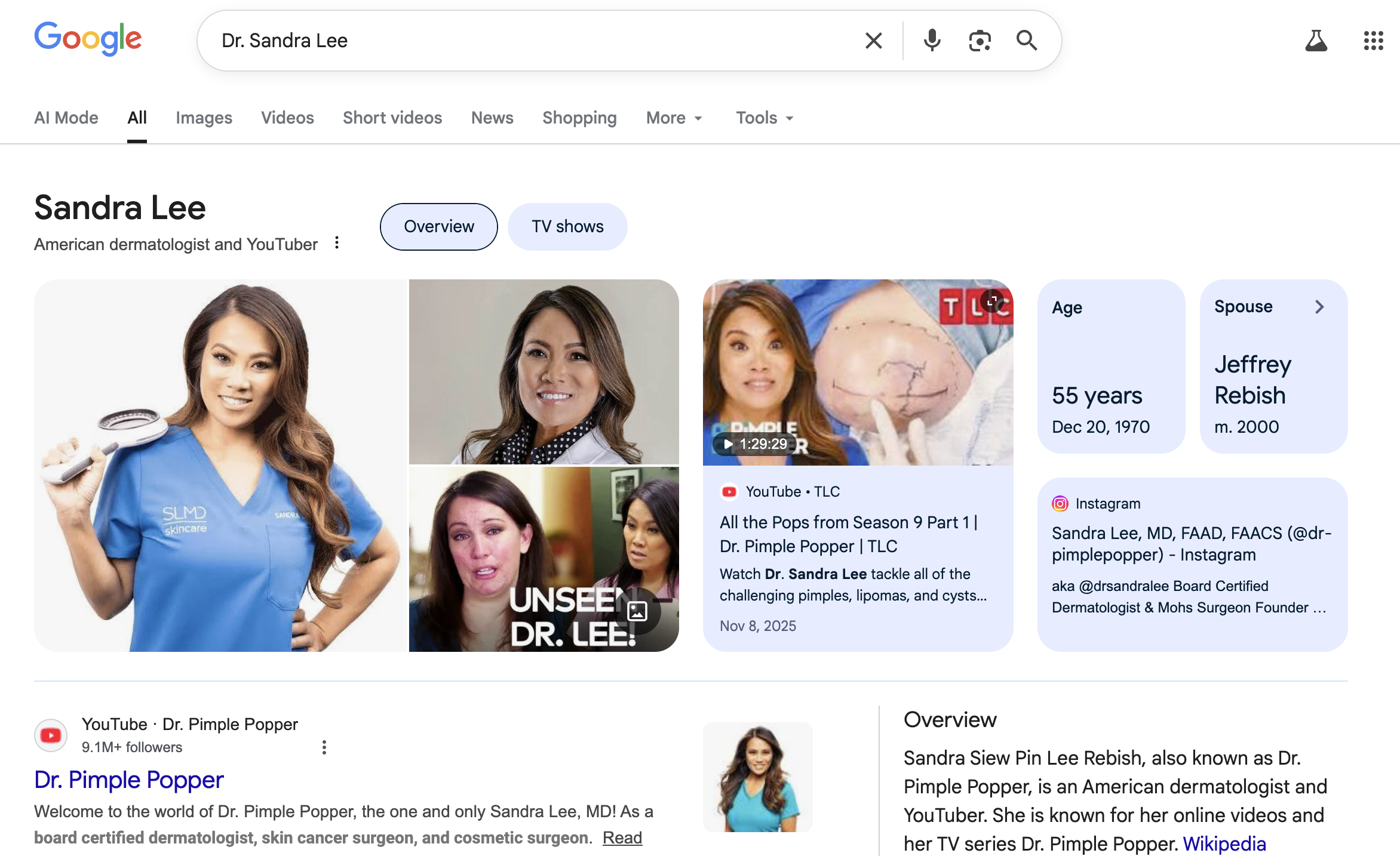
Entity-based visibility means Google recognizes you as a specific person with specific credentials, connected to a specific business, in a specific location. When Google understands you as an entity, your content ranks higher, your Knowledge Panel appears, and your name shows up in related searches.
The difference in practice:
Keyword SEO alone: Your website ranks for "best functional medicine practitioner in [city]" — maybe. You're competing with every other functional medicine practitioner's website on keyword density, backlinks, and technical SEO.
Entity-based visibility: Google recognizes you as a notable functional medicine practitioner. Your content ranks because Google trusts you as an authoritative source. Your Knowledge Panel appears. AI search models cite you. Your name becomes synonymous with your expertise.
Building entity-based visibility requires more than on-page SEO. It requires the full stack: structured data, press coverage, knowledge base entries, consistent cross-platform identity, and published authority content.
5. The 5-Layer Visibility Framework
Building comprehensive online visibility as a functional medicine practitioner requires work across five distinct layers. Each builds on the one below it. Skip a layer and the ones above it are weaker.
Layer 1 Foundation — Your Owned Properties
Your website, Google Business Profile, LinkedIn, and professional directory listings. These are the properties you control completely. Make them complete, consistent, and optimized with structured data. This layer is table stakes — you cannot build visibility without a solid foundation.
Layer 2 Authority — Published Content
Guest articles in The Journal of Functional Medicine and Integrative Medicine: A Clinician's Journal, contributed pieces on industry blogs, and content on your own site that demonstrates expertise. This layer builds the authority signals that Google and AI models use to evaluate your credibility. Aim for at least one published article per month on external sites.
Layer 3 Entity — Knowledge Graph Signals
Wikidata entry, structured data on your website, consistent sameAs links, and profiles on knowledge bases (Crunchbase, IMDB, etc.). This layer tells Google and AI systems that you are a recognized entity, not just a website owner. This is what triggers Knowledge Panels.
Layer 4 Social Proof — Reviews and Mentions
Active review profiles on Google Reviews and Yelp, client testimonials, and social media mentions. This layer provides the third-party validation that both search engines and patients with chronic conditions seeking root-cause treatment, individuals dissatisfied with conventional medicine outcomes, and health-conscious patients seeking preventive care need to trust you. Volume and recency matter more than perfection.
Layer 5 Press — Media Coverage
Published articles about you (not by you) in recognized publications and news sites. Press coverage is the highest-authority signal available to functional medicine practitioners. One well-placed article can outrank your own website for your name search and persist for years.
Not Sure Which Layer Needs Work?
We audit all five layers of your online visibility and show you exactly where the gaps are. Free for functional medicine practitioners.
Get Your Free Visibility Audit6. Keywords That Matter for Functional Medicine Practitioners
patients with chronic conditions seeking root-cause treatment, individuals dissatisfied with conventional medicine outcomes, and health-conscious patients seeking preventive care search for functional medicine practitioners using predictable patterns. Understanding these patterns tells you exactly what content to create and what searches to target.
The four keyword categories for functional medicine practitioners:
Name searches. "Functional Medicine Practitioner + name" or just the person's name. These are high-intent — the searcher already knows about you and is doing due diligence. Your goal: control page one for your name.
Service searches. "functional medicine doctor, functional medicine practitioner near me, root cause medicine, integrative health doctor" and variations. These are patients with chronic conditions seeking root-cause treatment, individuals dissatisfied with conventional medicine outcomes, and health-conscious patients seeking preventive care looking for what you offer but who do not know you yet. Content and SEO win these.
Location searches. "functional medicine practitioner near me" and "functional medicine practitioner in [city]." Local SEO, Google Business Profile, and directory listings drive these results.
Research searches. "How to choose a functional medicine practitioner" or "what does a functional medicine practitioner do." These are early-stage patients with chronic conditions seeking root-cause treatment, individuals dissatisfied with conventional medicine outcomes, and health-conscious patients seeking preventive care who will remember the functional medicine practitioner who gave them the best answer. Content marketing owns this category.
7. Your 90-Day Visibility Action Plan
Visibility is not built overnight. It compounds. Here is a 90-day plan designed for functional medicine practitioners who want measurable progress without disrupting their practice.
Days 1-30: Foundation. Audit all existing properties. Update your website with structured data. Claim and complete your Google Business Profile. Update LinkedIn. Register on any industry directories you are missing. Set up Google Alerts for your name.
Days 31-60: Authority. Publish two articles on external sites — The Journal of Functional Medicine and Integrative Medicine: A Clinician's Journal or equivalent. Create a Wikidata entry with proper references. Begin asking every client for reviews. Post on LinkedIn twice per week.
Days 61-90: Acceleration. Publish two more external articles. Create authority data assets (Crunchbase, IMDB if applicable). Secure at least one piece of press coverage on a Google News-indexed site. Run a fresh audit to measure progress.
After 90 days of consistent work, most functional medicine practitioners see: 2-4 new page-one results they control, improved review volume and rating, the beginning of entity recognition in Google's Knowledge Graph, and the foundation for a Knowledge Panel in the following quarter.
8. How to Measure Visibility Progress
What gets measured gets managed. Track these metrics monthly:
- Page-one control. How many of the 10 organic results for your name search do you control? Start tracking this number and aim to increase it by 1-2 per quarter.
- Knowledge Graph status. Use our Knowledge Graph Explorer to check whether Google recognizes you as an entity. Track changes over time.
- Review count and rating. Total reviews across all platforms, average rating, and monthly review velocity (new reviews per month).
- Published content count. Total articles published on external sites. Aim for at least 2 per month after your first 90 days.
- AI search presence. Search for yourself in ChatGPT, Perplexity, and Google AI Overviews. Are you mentioned? This is the newest metric and the one most functional medicine practitioners are not tracking yet.
Start With Your Knowledge Graph Status
The fastest way to measure your visibility foundation is to check whether Google already has entity data on you. Many functional medicine practitioners are surprised to find they are already in the Knowledge Graph.
Check Your Knowledge Graph Status →Frequently Asked Questions
How can functional medicine practitioners improve their visibility in AI search results?
Online visibility is how easily patients with chronic conditions seeking root-cause treatment, individuals dissatisfied with conventional medicine outcomes, and health-conscious patients seeking preventive care can find you through Google search, AI answer engines, and social platforms. It includes your search rankings, Knowledge Panel status, review presence, and whether AI tools like ChatGPT mention you when asked about functional medicine practitioners.
What content strategy helps functional medicine practitioners appear in AI-generated answers?
AI search engines like ChatGPT, Google AI Overviews, and Perplexity synthesize answers from published content across the web. Functional Medicine Practitioners with published articles, Knowledge Graph entries, and strong entity signals are more likely to be cited in these AI-generated answers — gaining visibility without traditional click-through.
How do AI search platforms evaluate functional medicine practitioner authority?
Foundation work (profile optimization, structured data, review systems) shows results in 30-60 days. Authority building (published articles, press coverage, Knowledge Panel pursuit) takes 3-6 months for measurable impact. The results compound — each month of work amplifies the previous months' efforts.
What is the difference between SEO and online visibility?
SEO focuses on ranking your website higher in Google search results. Online visibility is broader — it includes SEO, but also Knowledge Panel presence, AI search mentions, review reputation, entity recognition, and press coverage. Full visibility means being found and trusted across every channel patients with chronic conditions seeking root-cause treatment, individuals dissatisfied with conventional medicine outcomes, and health-conscious patients seeking preventive care use to evaluate functional medicine practitioners.
See What Google Says About You
Get a free, personalized audit of your online presence — see exactly what shows up when people Google your name.
Get Your Free Google Audit