In This Guide
1. Why Personal Branding Matters for Accountants
Business owners seek accountants they trust with their finances. They research accountants based on reviews and credentials. An accountant with a strong personal brand and positive client testimonials attracts more tax and bookkeeping clients.
small businesses and individuals needing tax and financial services search Google before making a decision. They scan the first page of results and make a judgment in seconds. A accountant with published articles, a Google Knowledge Panel, and strong reviews looks more credible than one with a bare-bones website and scattered directory listings. Both may have identical skills. The patient, client, or customer picks the one who looks more trustworthy online.
Personal branding is not self-promotion. It is the work of making your real expertise visible to the people who need to find you. For accountants, that means controlling what appears when someone searches your name on Google.
small businesses and individuals needing tax and financial services do not choose the most qualified accountant. They choose the one who appears most credible in the ten seconds they spend scanning Google results. Personal branding closes the gap between your actual expertise and how that expertise is perceived online.
2. Audit Your Current Google Presence
Open an incognito browser window. Search your full name. Then search your name plus your city. Then search your practice or company name. Do all three.
For each search, document every result on page one and sort them into four categories:
- Properties you own — your website, social profiles, Google Business Profile
- Earned coverage — news articles, interviews, podcast features, press mentions
- Third-party profiles — Google Reviews, Trustpilot, Yelp, directory listings
- Negative or irrelevant results — bad reviews, outdated info, someone else with your name
Count how many of the first ten results you control. Fewer than five means you have a visibility problem. Any negative content on page one means you have an urgency problem.
What a strong result page looks like
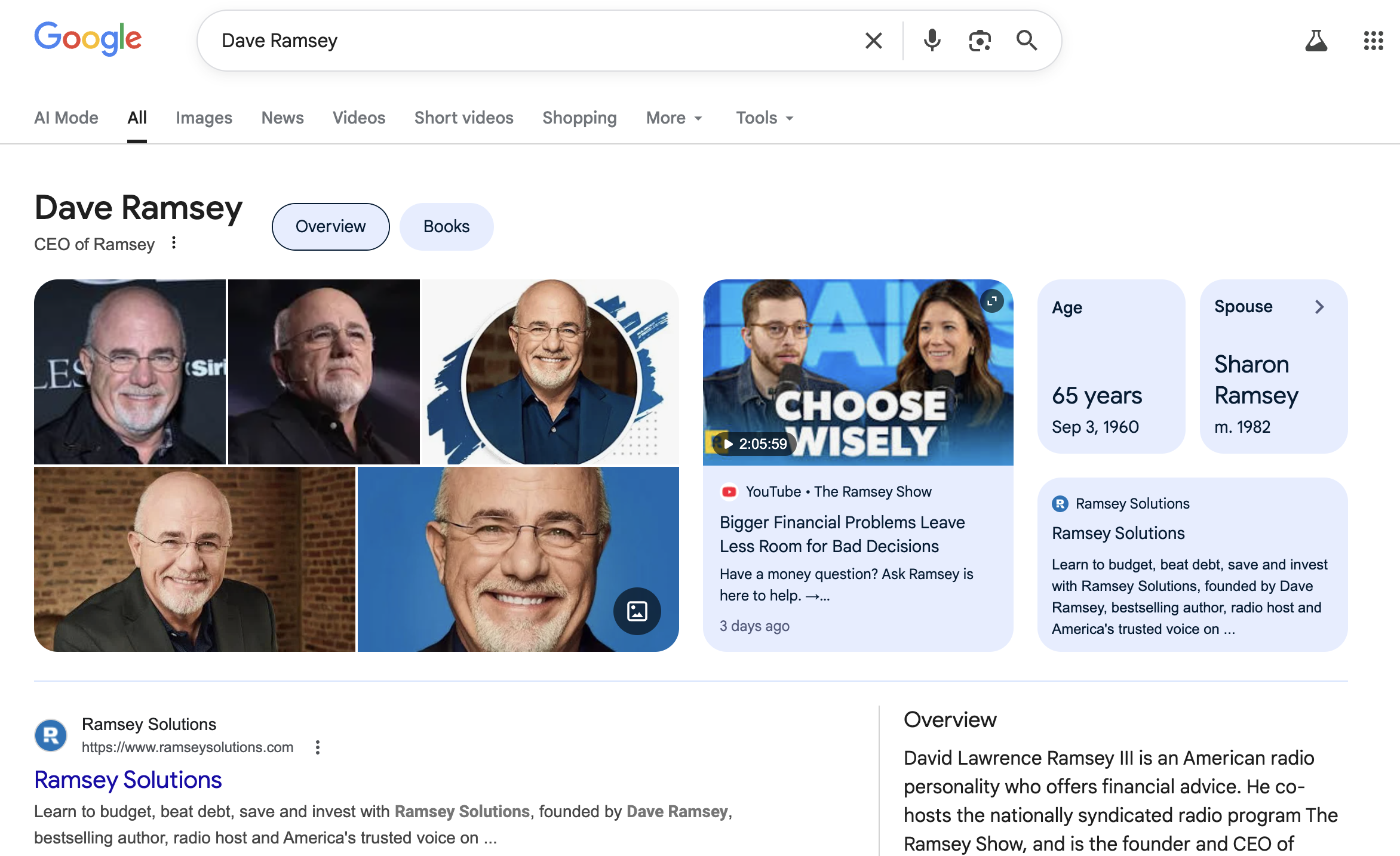
A accountant with a well-built personal brand sees this when their name is Googled: a Knowledge Panel on the right showing their photo and credentials. Their own website ranking first. Two or three published articles in Journal of Accountancy, Accounting Today or similar outlets. Strong profiles on Google Reviews, Trustpilot, Yelp. Professional social media pages filling out the rest of page one.
That accountant controls eight of ten results. That is the target.
3. Build Your Digital Foundation
Your personal brand needs properties you control. Three give you the most leverage:
1 A Personal Website
Your business website covers services, pricing, and logistics. A personal brand website covers you: your credentials, published work, speaking engagements, and philosophy. A single page with a professional headshot, your bio, and links to your best work. The goal: own one more Google result for your name that you control top to bottom.
2 Google Business Profile
If you have not claimed and optimized your Google Business Profile, stop reading and do it now. This is the single highest-leverage action a accountant can take for local search visibility. Complete every field. Add photos regularly. Respond to every review within 24 hours. Google rewards active profiles with higher placement.
3 LinkedIn
LinkedIn ranks well in Google for name searches. A complete profile with your credentials, certifications, and a professional headshot will land on page one for most accountant name searches. Update your headline beyond just your job title. Post content twice a month. Comment on industry discussions. LinkedIn's algorithm favors active professionals.
Use the same professional headshot, the same bio structure, and the same credentials list across every platform. Google's entity recognition algorithms connect these signals to build your identity profile. Inconsistent information across platforms confuses them and weakens your presence.
4. Create Content That Ranks
Content drives personal branding. But accountants need a different content strategy than lifestyle influencers or tech startups. Your small businesses and individuals needing tax and financial services are looking for answers, reassurance, and proof of expertise.
Three categories of content produce the best results for accountants:
Education content. Answer the questions your small businesses and individuals needing tax and financial services are already searching for. Write about the topics you explain in every consultation or meeting. These are high-volume searches from people who are close to making a decision. A accountant who answers these questions ranks for them and builds trust at the same time.
Local authority content. Content that ties you to a specific geographic area: community involvement, local partnerships, market insights specific to your region. This signals to Google that you are a real, active presence in a specific location.
Thought leadership. Commentary on industry trends, opinions on emerging practices, conference takeaways. This content positions you as a peer leader and feeds into Google's E-E-A-T signals (Experience, Expertise, Authoritativeness, Trustworthiness).
Your own blog is a start, but it is limited to your domain's authority. Guest posts on industry sites, contributed articles in Journal of Accountancy, Accounting Today, and interviews on relevant podcasts create backlinks, build authority, and put your name in front of new audiences. One well-placed article on a high-authority domain can outrank dozens of blog posts on your own site.
Not sure where your Google presence stands?
We run a free audit that shows you what small businesses and individuals needing tax and financial services see when they search your name, what is working, and what is missing.
Get Your Free Audit5. How to Get a Google Knowledge Panel
A Google Knowledge Panel is the information box that appears on the right side of search results for recognized people and organizations. A Knowledge Panel displays your accounting credentials, tax specialties, and client testimonials. It builds trust with businesses seeking accounting services.
Google does not let you create a Knowledge Panel manually. Their algorithms generate panels based on information found across the web. But you can influence whether one appears and what it contains.
Four factors trigger a Knowledge Panel:
- Consistent entity data. Your name, business, and credentials must appear identically across multiple authoritative sources. Google cross-references these to confirm you are a real, distinct entity.
- Wikidata presence. A Wikidata entry (even without a full Wikipedia article) increases your chances. Wikidata feeds directly into Google's Knowledge Graph.
- Published press coverage. Articles about you in recognized publications create the "notability" signals Google looks for.
- Structured data on your website. Person schema and Organization schema in your site's code help Google's crawlers understand who you are.
Most accountants will not earn a Knowledge Panel by accident. The accountants who have them built a deliberate strategy around entity signals, press coverage, and structured data over three to six months.
6. Earn Press Coverage That Lasts
Press coverage creates high-authority backlinks that improve your search rankings and puts your name in publications that small businesses and individuals needing tax and financial services and Google both respect.
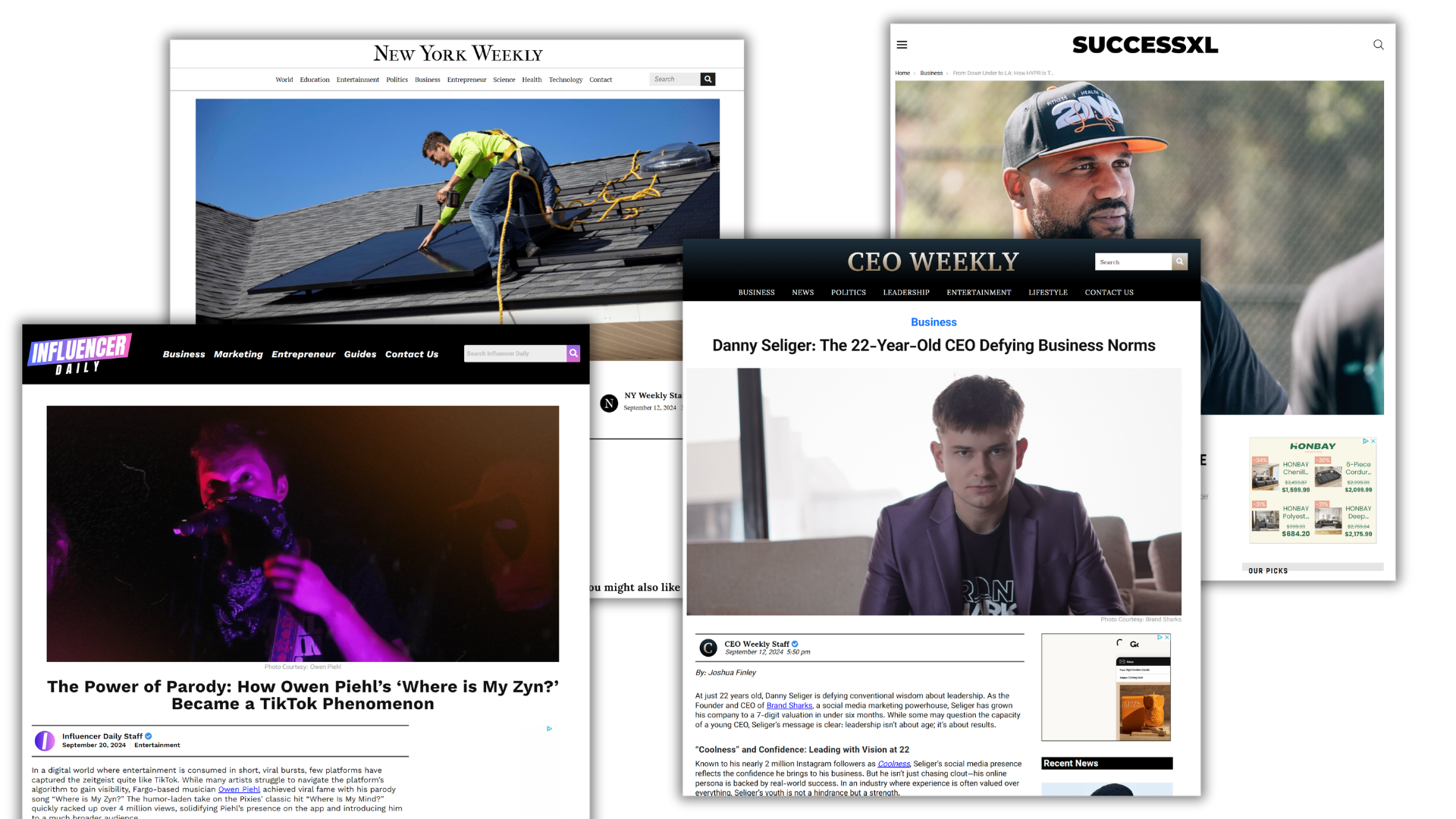
You do not need the New York Times. Industry publications, local media, and mid-tier online news outlets all count:
Industry publications. Journal of Accountancy, Accounting Today and similar outlets publish contributed articles. Write a 1,000-word piece on a topic you know well. The publication gets expert content. You get a byline and a backlink on a high-authority domain.
Local media. Pitch your expertise to local journalists. Reporters cover stories about local professionals with interesting angles. Position yourself as the expert source they call when they need a quote.
Online news platforms. Platforms that syndicate to Google News carry significant weight in search results and entity recognition. An article on one of these sites can rank on page one for your name within weeks.
Earning press coverage takes time. Writing pitches and building media relationships is a second job on top of running a practice or business. If that is not realistic for your schedule, working with a PR or personal branding service compresses the timeline. One well-placed article can produce years of search visibility. The ROI math favors investing in placement over doing it yourself, unless you have the bandwidth and enjoy the process.
7. Build Social Proof That Compounds
Reviews and testimonials are the social proof layer of your personal brand. A accountant with hundreds of positive reviews on Google Reviews, Trustpilot, Yelp communicates something that no website or article can match: other people trust this person.
The accountants who accumulate reviews share a few habits:
They ask every satisfied client. Not occasionally. Every time. A simple follow-up message with a direct link to your review page converts at 10-15%. Make it part of your workflow, not an afterthought.
They respond to every review. Positive reviews get a personalized thank-you. Negative reviews get a professional, empathetic response. Future small businesses and individuals needing tax and financial services read your responses as much as the reviews themselves.
They never buy fake reviews. Google's detection catches them, and the penalty is severe: review removal, profile suspension, or complete delisting.
They address negatives with specifics. "We're sorry you had a bad experience" says nothing. A response that acknowledges the specific issue and explains what you have done about it turns a complaint into a demonstration of character.
8. Check Your Knowledge Graph Status
Here is something most accountants do not realize: Google may already have a Knowledge Graph entry for you — even if you do not have a visible Knowledge Panel in search results yet. Google collects entity data from across the web and builds internal profiles long before a panel ever appears publicly.
The difference between having a Knowledge Graph entry and having a live Knowledge Panel comes down to confidence. Google needs enough consistent signals — published articles, structured data, Wikidata entries, directory listings — before it will surface a panel. But the underlying data often exists before you hit that threshold.
That means your next step is not a guess. You can check right now whether Google recognizes you as an entity.
Use Our Free Knowledge Graph Explorer
Search Google's Knowledge Graph API to see if you already have an entity entry. If you do, you are closer to a Knowledge Panel than you think. If you do not, you will know exactly where to start building.
Check Your Knowledge Graph Status →Thousands of accountants already have Knowledge Graph data that Google has collected from their published articles, professional directories, and structured data across the web. Most never check. The ones who do gain a clear picture of where they stand — and a specific roadmap for what to build next.
Frequently Asked Questions
How do accountants build a personal brand?
Most accountants see measurable changes in their Google search results within 60 to 90 days of consistent work. A complete personal brand with a Knowledge Panel, press coverage, and page-one dominance takes 6 to 12 months.
What credentials matter for accountants?
Accountants with strong personal brands attract higher-value small businesses and individuals needing tax and financial services, charge premium rates, and build businesses that grow through reputation rather than paid advertising. The investment compounds over time as your content and authority build on each other.
How do I attract more accounting clients?
Yes. The foundation is Google search results: your website, published articles, Knowledge Panel, and reviews. These work whether or not you post on social media. Social platforms accelerate results but are not required.
What is a Google Knowledge Panel and how do accountants get one?
A Knowledge Panel is the information box Google displays for recognized people and organizations. It shows your photo, credentials, and key facts in search results. Accountants earn them by building consistent entity data across the web through published articles, Wikidata entries, structured data, and mentions in authoritative sources.
See What Google Says About You
Get a free, personalized audit of your online presence — see exactly what shows up when people Google your name.
Get Your Free Google Audit