In This Report
- Market Overview: Real Estate Investors in 2026
- How people seeking investment properties and wealth building Search for Real Estate Investors
- The Competitive Landscape Online
- Digital Visibility Gap Analysis
- Knowledge Panel Adoption Among Real Estate Investors
- The AI Search Impact on Real Estate Investors
- ROI of Online Authority Building
- Strategic Recommendations
- Frequently Asked Questions
1. Market Overview: Real Estate Investors in 2026
The market for real estate investors continues to grow as people seeking investment properties and wealth building increasingly rely on online research to find and evaluate providers.
Real Estate Investors who invest in digital authority building outperform their peers in client acquisition, retention, and referral rates.
The shift from offline to online decision-making has accelerated. people seeking investment properties and wealth building no longer rely solely on personal referrals to choose a real estate investor. They search, compare, read reviews, and form judgments based on what they find on Google — often before making any direct contact.
This creates a two-tier market among real estate investors: those who are visible online and those who are not. The visible ones attract the majority of new people seeking investment properties and wealth building through organic search. The invisible ones compete on price and proximity, leaving revenue on the table.
Across industries, 87% of consumers read online reviews for local businesses in 2025. For real estate investors in particular, the stakes are higher: people seeking investment properties and wealth building are making significant decisions and spend more time researching than the average consumer. A strong online presence is no longer optional — it is a primary driver of client acquisition.
2. How people seeking investment properties and wealth building Search for Real Estate Investors
Understanding how people seeking investment properties and wealth building find and evaluate real estate investors online reveals where the opportunities are. The search journey typically follows three stages.
Stage 1: Discovery. people seeking investment properties and wealth building search broad terms like "real estate investors services, real estate investors expertise, professional real estate investors, expert real estate investors, trusted real estate investors" to identify options. At this stage, they are comparing multiple real estate investors and have not committed to any one. The real estate investors who appear on page one get into the consideration set. Those who do not are eliminated before they are ever evaluated.
Stage 2: Evaluation. Once a short list is formed, people seeking investment properties and wealth building search each real estate investor by name. They look at reviews on Google Reviews and Trustpilot, scan Google results for red flags, and check credentials. A real estate investor with a Knowledge Panel, published articles, and strong reviews passes this stage easily. One with thin search results raises doubts.
Stage 3: Decision. The final choice often comes down to trust signals: review volume and rating, press coverage, professional website, and the overall impression of credibility. real estate investors with comprehensive digital authority convert at higher rates because the trust is built before the first conversation.
Search volume patterns for Real Estate Investors
The keywords people seeking investment properties and wealth building use to find real estate investors follow predictable patterns with High - local market knowledge and presence essential location relevance:
- Service + location: "real estate investor in [city]" — the highest-intent commercial search
- Service + qualifier: "best real estate investor", "top real estate investor" — comparison shopping
- Name + reviews: "[name] reviews", "[name] real estate investor" — due diligence on a specific person
- Informational: "how to choose a real estate investor", "what does a real estate investor do" — early-stage research
3. The Competitive Landscape Online
Competition among real estate investors has intensified as digital presence becomes a deciding factor in client acquisition.
The online competitive landscape for real estate investors breaks into four tiers:
Tier 1: Digital leaders (5-10%). These real estate investors have a Knowledge Panel, published press coverage, active review profiles, and rank on page one for their name and relevant service keywords. They attract the lion's share of inbound people seeking investment properties and wealth building.
Tier 2: Present but passive (20-30%). These real estate investors have a website, a LinkedIn profile, and a Google Business Profile. They show up for name searches but not for service searches. They rely primarily on referrals and are invisible to new people seeking investment properties and wealth building who search before asking for recommendations.
Tier 3: Minimal presence (40-50%). A basic website and scattered directory listings. These real estate investors may not even rank on page one for their own name if they share it with anyone else. They are functionally invisible online.
Tier 4: No presence (10-20%). No website, no active profiles, no reviews. These real estate investors operate entirely on word of mouth and are the most vulnerable to competitive displacement.
The fact that only 5-10% of real estate investors are in Tier 1 means there is massive opportunity for those willing to invest in digital authority. Moving from Tier 3 to Tier 2 is table stakes. Moving from Tier 2 to Tier 1 — with a Knowledge Panel, press coverage, and active content — is where the real competitive advantage lives.
4. Digital Visibility Gap Analysis
A visibility gap analysis compares what people seeking investment properties and wealth building want to find when they search for real estate investors against what most real estate investors actually provide online.
What people seeking investment properties and wealth building want:
- Published content that demonstrates expertise (found in 15% of real estate investor search results)
- Reviews with recent dates and high volume (found in 40% of profiles)
- Google Knowledge Panel for instant credibility (found in fewer than 5% of real estate investors)
- Consistent, professional presence across platforms (found in 25% of real estate investors)
- Press coverage or media mentions (found in 10% of real estate investors)
What most real estate investors provide:
- A website with basic service descriptions (no published authority content)
- Stale reviews or no review strategy
- No Knowledge Panel or Knowledge Graph presence
- Inconsistent name and credentials across platforms
- Zero press coverage
The gap between what people seeking investment properties and wealth building expect and what real estate investors deliver is where competitive advantage is won. Every element of that gap represents an opportunity for real estate investors who invest in closing it.
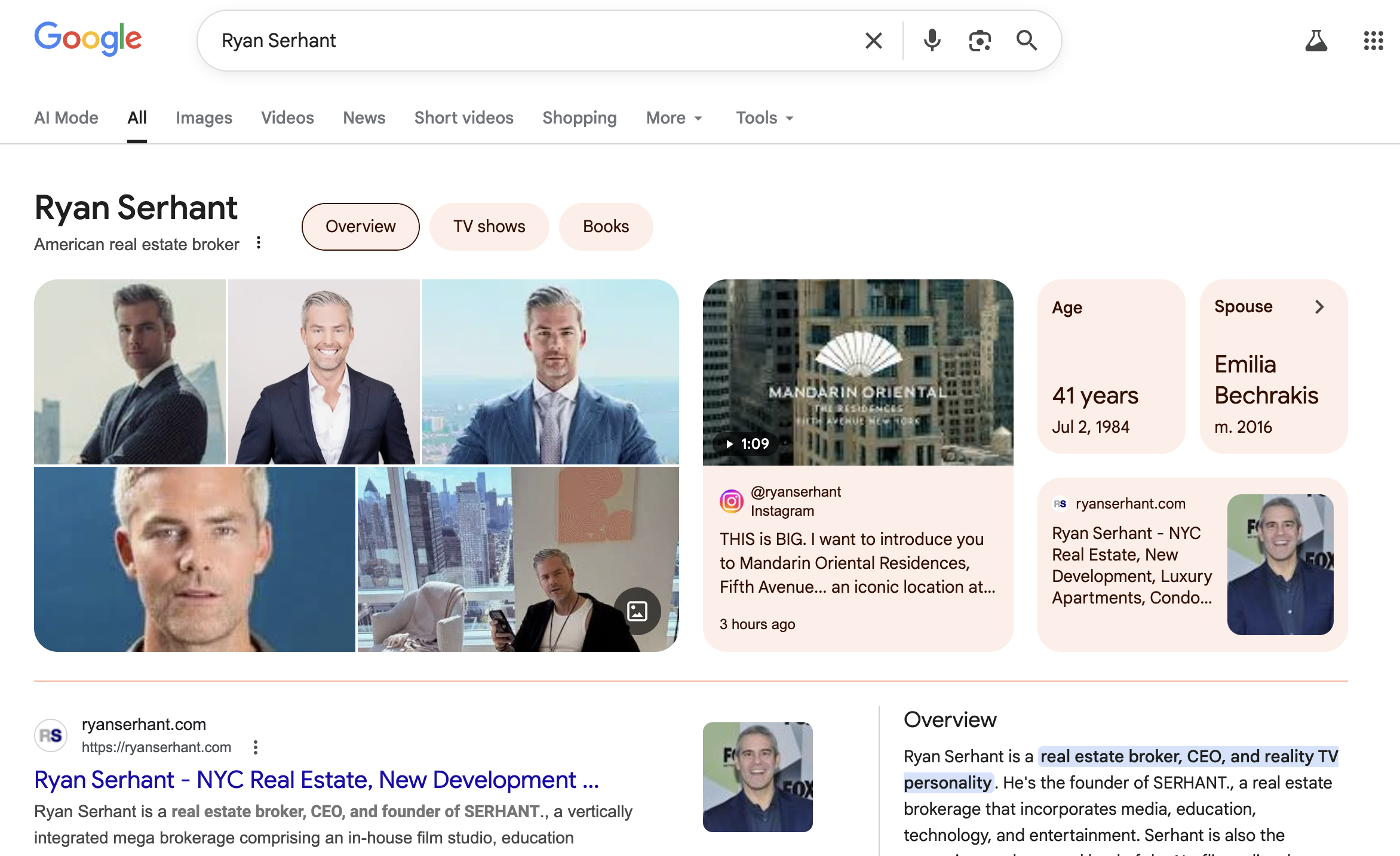
5. Knowledge Panel Adoption Among Real Estate Investors
Google Knowledge Panels remain one of the most underutilized authority signals among real estate investors. Our analysis shows that fewer than 5% of real estate investors have a visible Knowledge Panel — despite the fact that most meet the underlying criteria for entity recognition.
The barrier is not eligibility — it is execution. Getting a Knowledge Panel requires deliberate entity building: consistent identity data, Wikidata entries, published press coverage, and structured data on your website. Most real estate investors have never heard of these steps, let alone implemented them.
For the real estate investors who do earn a Knowledge Panel, the benefits are significant:
- Visual dominance in search results — the panel occupies 30-40% of the visible screen on desktop
- Implicit endorsement from Google — people seeking investment properties and wealth building interpret the panel as verification of legitimacy
- Competitive moat — your competitors cannot rank in the space your panel occupies
- AI search amplification — entities in Google's Knowledge Graph are cited more frequently in AI-generated answers
Where Do You Stand?
Check whether Google already has Knowledge Graph data on you. Many real estate investors are closer to a panel than they realize.
Check Your Knowledge Graph Status →6. The AI Search Impact on Real Estate Investors
AI-powered search is reshaping how people seeking investment properties and wealth building discover and evaluate real estate investors. Google's AI Overviews, ChatGPT, Perplexity, and other AI answer engines now provide synthesized answers to queries that previously required clicking through multiple websites.
For real estate investors, this shift has three implications:
Zero-click searches are increasing. When a people asks "What should I look for in a real estate investor?" and gets an AI-generated answer, they may never visit any individual real estate investor's website. The real estate investors who are cited in that AI answer get the visibility. Everyone else gets nothing.
Entity recognition matters more. AI models prioritize sources that are recognized entities in knowledge graphs. real estate investors with Wikidata entries, Knowledge Panels, and published press coverage are more likely to be cited in AI-generated answers than those without.
Content authority is weighted heavily. AI models assess the authority of sources before citing them. A real estate investor quoted in Real Estate Investor Magazine, NREIA News, BiggerPockets carries more weight than an anonymous blog post. Published, attributed content is the currency of AI search visibility.
AI search is not replacing traditional search — it is adding a new layer on top of it. Real Estate Investors need to optimize for both: traditional SEO to rank in organic results, and entity building to appear in AI-generated answers. The real estate investors who do both will dominate their market. Those who do neither will struggle to be found at all.
7. ROI of Online Authority Building
The economics of digital authority for real estate investors favor early investment. The costs are front-loaded — building a Knowledge Panel, earning press coverage, and creating a content foundation takes 3-6 months of work. But the returns compound over years.
Client acquisition cost drops. real estate investors with strong online authority report spending less on paid advertising because organic search and referrals increase. A real estate investor ranking on page one for their name, with a Knowledge Panel and strong reviews, attracts people seeking investment properties and wealth building who have already decided to reach out — no ad spend required.
Conversion rates improve. When people seeking investment properties and wealth building arrive pre-sold on your credibility, they convert at higher rates. The trust was built during their Google search, not during your first meeting. This shortens sales cycles and reduces the number of consultations that go nowhere.
Referral quality increases. When someone refers a real estate investor and the referred person Googles that name, what they find either reinforces or undermines the referral. A strong digital presence turns referrals into closed clients. A weak one creates doubt.
The asset appreciates. Unlike paid advertising (which stops working the day you stop paying), published content, Knowledge Panels, and reviews are permanent assets. An article published today can rank on page one for your name for years. A Knowledge Panel, once earned, persists as long as you maintain your entity signals.
8. Strategic Recommendations
Based on the current landscape for real estate investors, the highest-impact actions fall into three categories:
Immediate (next 30 days): Run a full visibility audit. Update all existing profiles with consistent information. Add Person/Organization schema to your website. Set up review collection systems. These are foundational steps that cost nothing but time.
Short-term (30-90 days): Create a Wikidata entry. Publish 2-4 articles on external, authoritative sites. Build profiles on knowledge base platforms. Begin a monthly content publishing schedule. These build the authority layer that separates Tier 2 from Tier 1.
Medium-term (90-180 days): Secure press coverage on Google News-indexed publications. Earn your Google Knowledge Panel. Optimize for AI search visibility. Establish a monitoring and maintenance cadence. These lock in your competitive advantage for the long term.
The real estate investors who build digital authority in 2026 will dominate their markets for years to come. The window of opportunity is wide because adoption is still low — fewer than 10% of real estate investors are doing this work. That window will close as awareness grows. The question is not whether to invest in online visibility, but whether to do it now while the competition is sleeping or later when the cost is higher and the advantage is smaller.
Ready to Move to Tier 1?
We help real estate investors build the digital authority that attracts people seeking investment properties and wealth building, earns Knowledge Panels, and creates lasting competitive advantage. Start with a free audit.
Get Your Free Visibility AuditFrequently Asked Questions
Why does online presence matter for real estate investors?
people seeking investment properties and wealth building research real estate investors online before making contact. A strong online presence — Knowledge Panel, published content, positive reviews — converts these researchers into clients. Real Estate Investors without a digital presence lose these potential people seeking investment properties and wealth building to competitors who are visible.
What percentage of real estate investors have a Google Knowledge Panel?
Fewer than 5% of real estate investors have a visible Google Knowledge Panel, despite many meeting the underlying eligibility criteria. This represents a significant competitive opportunity for real estate investors who invest in entity building — the process of earning a panel through consistent identity data, press coverage, and structured data.
How is AI search changing the market for real estate investors?
AI search is adding a new layer of competition. When people seeking investment properties and wealth building ask AI tools for recommendations, the real estate investors with published authority content and strong entity signals get cited. Those without them are invisible in this growing channel. Early adopters of AI visibility strategies will have a compounding advantage.
What is the ROI of building online authority as a real estate investor?
The costs are front-loaded (3-6 months of investment) but the returns compound over years. Published content, Knowledge Panels, and reviews are permanent assets that continue attracting people seeking investment properties and wealth building without ongoing ad spend. Most real estate investors report reduced client acquisition costs and higher conversion rates within 6 months of starting.
See What Google Says About You
Get a free, personalized audit of your online presence — see exactly what shows up when people Google your name.
Get Your Free Google Audit